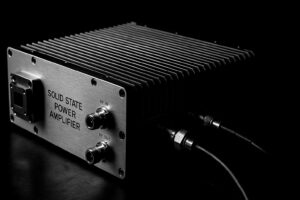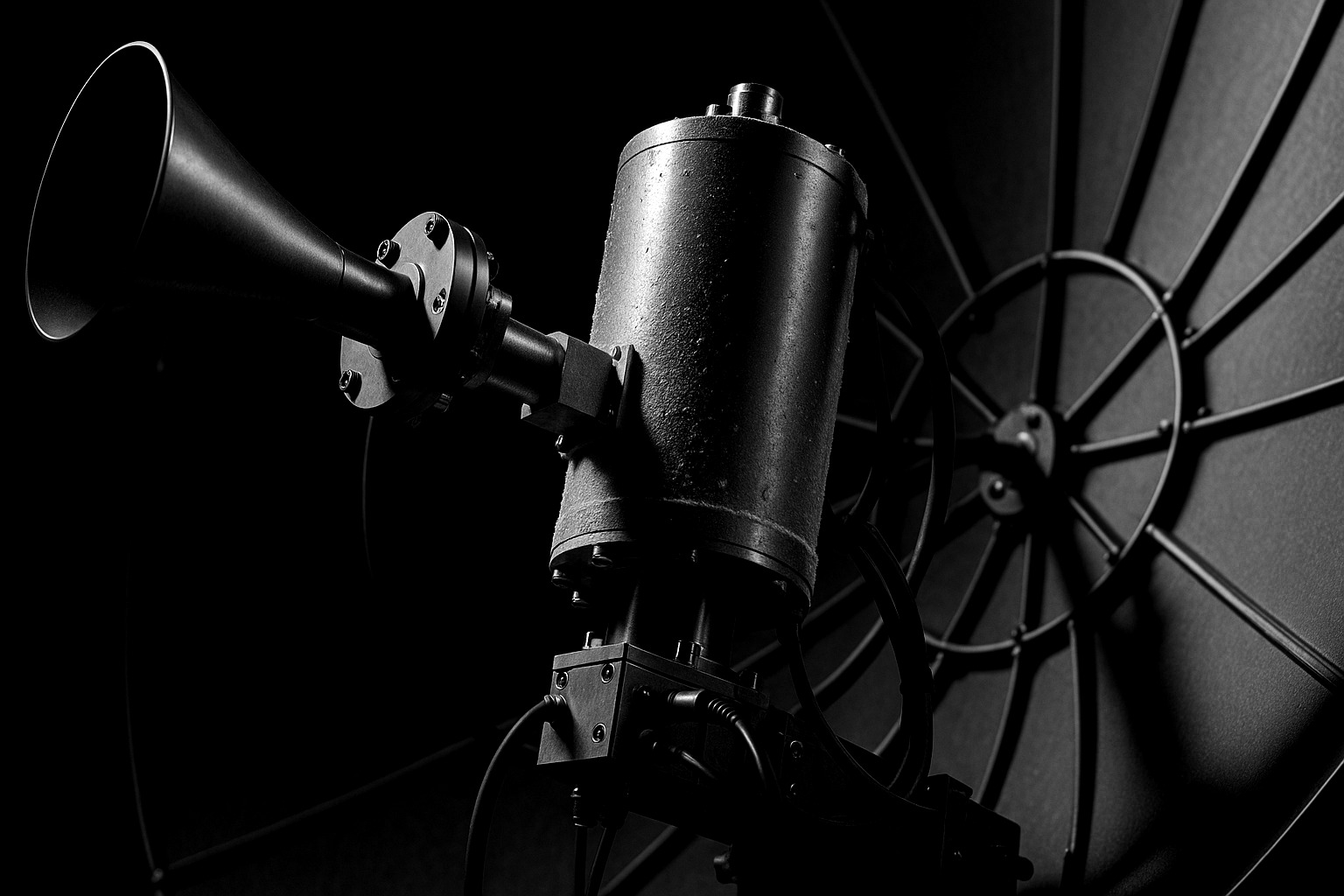
Every satellite communications engineer faces a familiar dilemma at some point: the link budget does not close, and the most obvious solution — a larger antenna — is either too expensive, physically impossible, or both. This is where compact cryo-LNA systems change the equation entirely. By dramatically reducing the noise temperature at the front end of the receive chain, cryogenic low noise amplifiers allow operators to achieve the same G/T performance from a smaller dish that would otherwise require a significantly larger aperture.
The concept is elegantly simple in principle. Antenna G/T — the ratio of antenna gain to system noise temperature — is the single most important figure of merit for any satellite receive terminal. You can improve it by increasing the numerator (bigger antenna, higher gain) or by decreasing the denominator (lower system noise temperature). For decades, the industry defaulted to bigger antennas. But as real estate costs climb, installation constraints tighten, and operators seek more flexible deployment options, the noise temperature approach has become increasingly attractive.
This article explores how modern compact cryogenic receiver technology is enabling a fundamental shift in ground terminal design philosophy. We examine the physics behind G/T improvement through noise reduction, the practical realities of deploying cryo-cooled systems in operational environments, and the economic case for choosing cryogenic amplification over larger antenna structures.
G/T Fundamentals and Importance
To appreciate why cryogenic amplification matters, it helps to revisit the fundamentals of G/T and its role in satellite link performance. The G/T ratio, expressed in dB/K, captures the receive terminal’s ability to extract useful signal from the background noise. A higher G/T means the terminal can receive weaker signals or sustain higher data rates from a given satellite — or equivalently, that the satellite can use less power to serve that terminal.
The gain component of G/T is determined primarily by the antenna’s physical aperture and the operating frequency. A 5-meter dish at Ku-band, for example, provides roughly 6 dB more gain than a 2.5-meter dish at the same frequency. But gain is only half the story. The system noise temperature — which includes contributions from the antenna itself, the feed assembly, the atmosphere, the ground environment, and critically the first amplifier in the receive chain — has an equally powerful effect on the overall figure of merit.
Consider a practical example. A 7-meter antenna with a conventional low noise amplifier (LNA) operating at a noise temperature of 60 K might achieve a system noise temperature of around 120 K. Replace that room-temperature LNA with a compact cryo-LNA operating at 15 K, and the system noise temperature drops to approximately 45 K. That is a reduction of roughly 4.3 dB in noise temperature, which translates directly into a 4.3 dB improvement in G/T — equivalent to nearly doubling the antenna diameter.
This relationship is not linear and depends on the relative contributions of different noise sources, but the fundamental point holds: reducing the LNA noise temperature is one of the most effective ways to improve receive performance without touching the antenna structure. For operators working with small antenna performance constraints, this insight opens up entirely new design possibilities.
Noise Temperature Reduction
The physics of noise temperature reduction in cryogenic systems follows directly from thermodynamics. Every electronic component generates thermal noise proportional to its physical temperature. By cooling the LNA’s active devices — typically high electron mobility transistors (HEMTs) fabricated in gallium arsenide or indium phosphide — to cryogenic temperatures around 15 to 20 Kelvin, the thermal noise contribution drops by roughly an order of magnitude compared to room-temperature operation.
But the improvement goes beyond simple thermal scaling. HEMT devices exhibit a well-documented phenomenon where their noise performance improves faster than the physical temperature decrease would predict. At cryogenic temperatures, the electron transport properties of the semiconductor material change favourably, further reducing the minimum achievable noise temperature. The result is that a cryogenic LNA operating at 15 K can achieve noise temperatures of 3 to 8 K depending on the frequency band — far below what any room-temperature amplifier can manage.
The cascade effect is important to understand. In any receive chain, the first amplifier’s noise contribution dominates the overall system noise temperature, as described by the Friis formula. A cryogenic first stage with high gain effectively suppresses the noise contributions of all subsequent stages, making them nearly irrelevant to system performance. This is why the investment in cooling the first amplifier yields such outsized returns.
Cryo-LNA Impact on System Performance
The practical impact of deploying a cryo-LNA system extends well beyond the simple noise temperature improvement. When you improve the G/T of a receive terminal, you create flexibility that can be exploited in multiple ways depending on your operational priorities.
The most direct application is maintaining the same link performance with a smaller antenna. If your mission requires a specific G/T to close the link budget, a cryogenic front end lets you achieve that G/T with a smaller aperture. The cost and logistical advantages can be substantial: a 4.5-meter antenna is dramatically easier to transport, install, and maintain than a 9-meter antenna, yet with a cryo-LNA, both can deliver comparable receive performance.
Alternatively, you can keep the existing antenna and use the improved G/T to enhance link performance. Higher G/T translates directly to improved signal-to-noise ratio, which enables higher data rates, better availability margins in adverse weather conditions, or the ability to work with lower-power satellite transponders. For operators buying satellite capacity, improved ground terminal performance can reduce the required satellite bandwidth and associated leasing costs.
There is also a resilience dimension. Ground stations with higher G/T have more margin to absorb degradations from rain fade, antenna pointing errors, or aging satellite transponders without losing service. In military and government applications, this additional margin can be the difference between maintaining communications during a critical operation and losing contact at the worst possible moment.
Compact System Design
Early cryogenic systems had a well-earned reputation for being bulky, complex, and maintenance-intensive. Modern compact cryogenic receiver designs have addressed these historical concerns quite effectively, though some engineering challenges remain.
Today’s compact cryo-LNA systems integrate the cryocooler, vacuum dewar, LNA module, and associated monitoring electronics into a single package that can mount directly on the antenna feed. The total volume is typically comparable to a conventional LNB housing — a remarkable reduction from the laboratory-scale cryogenic setups of earlier generations. Weight has been reduced correspondingly, making it feasible to mount cryo-LNA systems on smaller antennas without exceeding the feed support structure’s load capacity.
The thermal design of these compact systems deserves particular attention. The cryocooler must remove heat from the LNA cold head while maintaining stable temperature regulation despite varying ambient conditions. Modern pulse tube and Stirling cycle coolers achieve this with remarkable efficiency, consuming only 100 to 300 watts of electrical power to maintain the cold head at 15 K. The waste heat is rejected through compact heat exchangers, and the entire thermal management system operates automatically without operator intervention.
Integration with the antenna feed system has also improved significantly. Modern cryo-LNA packages are designed as drop-in replacements for conventional LNBs, with standard waveguide interfaces and compatible mounting arrangements. This G/T enhancement satcom approach means operators can upgrade existing terminals to cryogenic operation without redesigning the feed assembly or antenna structure — a critical practical consideration that has accelerated adoption.
Installation Requirements
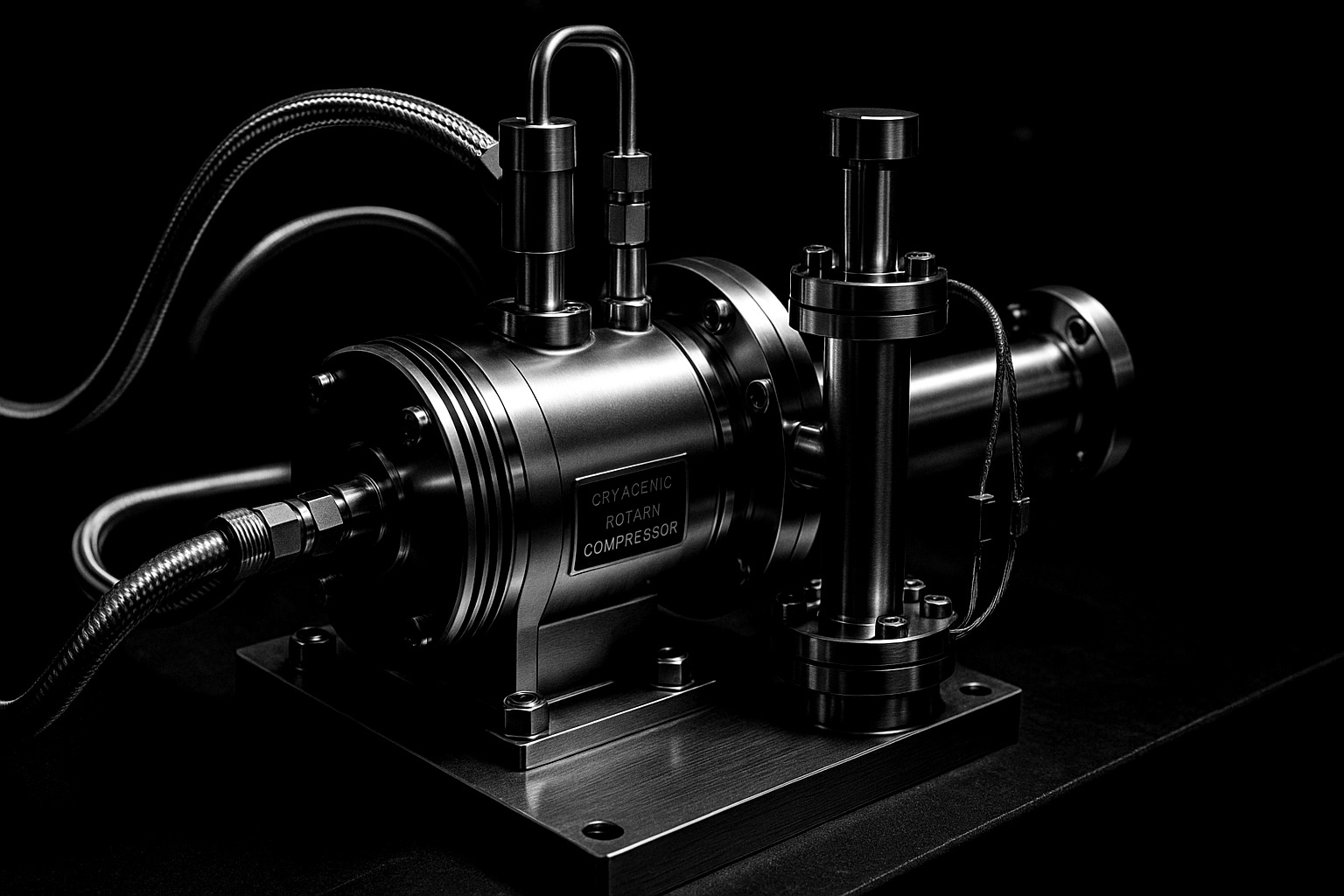
Installing a compact cryo-LNA system is more involved than swapping a conventional LNB, but considerably less complex than it was even ten years ago. The primary additional requirements are power supply for the cryocooler, signal and monitoring cable routing, and ensuring adequate ventilation around the heat rejection surfaces.
Power requirements are modest by ground station standards. A typical compact cryo-LNA system draws 200 to 400 watts total, including the cryocooler compressor, monitoring electronics, and any ancillary heaters. This power must be available at the antenna feed point, which may require installing additional cabling if the existing feed infrastructure only provides the low-current DC supply used by conventional LNBs.
The cooldown period — the time from power-on to operational temperature — is an important planning consideration. Modern systems typically reach operating temperature within 2 to 4 hours, during which the LNA is not yet at its specified noise performance. For permanently installed systems this is irrelevant after the initial deployment, but for transportable or rapidly deployable stations, the cooldown time must be factored into operational readiness calculations.
Zero-Maintenance Solutions
Historically, the maintenance burden of cryogenic systems was their greatest operational disadvantage. Early systems required regular cryogen refills, frequent vacuum pump maintenance, and specialized technician support. The development of closed-cycle zero maintenance cryo-cooler technology has fundamentally changed this situation.
Modern pulse tube cryocoolers have no moving parts in the cold head, which eliminates the primary wear mechanism of earlier Stirling and Gifford-McMahon designs. The compressor module, which does contain moving parts, has been engineered for continuous operation lifetimes exceeding 80,000 hours — approximately ten years of uninterrupted operation. Some manufacturers now offer cryogenic amplifier systems with guaranteed maintenance-free intervals of five years or more.
The vacuum system has been equally transformed. Early cryostats required periodic evacuation to maintain the insulating vacuum around the cold components. Modern systems use sealed dewars with getter materials that maintain vacuum integrity for the entire operational lifetime without any external pumping. This eliminates what was previously one of the most common maintenance requirements and a frequent source of system downtime.
Remote monitoring capabilities further reduce the operational burden. Current-generation cryo-LNA systems provide comprehensive telemetry — cold head temperature, compressor status, vacuum level, LNA bias conditions, and gain stability — over standard network interfaces. Operators can monitor system health from a central control room and receive automated alerts if any parameter drifts outside normal bounds, enabling predictive maintenance before any service impact occurs.
Reliability Considerations
Reliability data from operational deployments has been steadily building confidence in cryo-LNA technology. Mean time between failures (MTBF) figures for modern systems typically exceed 60,000 hours, with some manufacturers quoting 100,000 hours or more for the complete cryo-LNA assembly. These numbers compare favourably with other complex subsystems in the ground station signal chain.
The dominant failure mode in most systems is gradual degradation of cryocooler performance over time, which manifests as a slow increase in cold head temperature and corresponding increase in LNA noise temperature. This degradation is predictable and gradual, giving operators ample warning before performance drops below acceptable levels. When the cryocooler eventually requires replacement, the swap can be performed without removing the entire assembly from the antenna, minimizing downtime.
Environmental qualification of modern cryo-LNA systems covers a wide range of operating conditions. Units are typically rated for ambient temperatures from minus 40 to plus 55 degrees Celsius, humidity up to 100 percent, and wind speeds consistent with antenna operational limits. Salt fog, sand, and dust testing is standard for units destined for coastal or desert installations. This level of environmental hardening is essential for the unattended operation that zero maintenance cryo-cooler designs are intended to support.
Economic Analysis
The economic case for compact cryo-LNA systems depends heavily on the specific application, but in many scenarios, the numbers are compelling. The comparison framework should evaluate total cost of ownership over the system’s operational lifetime, including capital expenditure, installation, maintenance, and the indirect costs or benefits of the performance difference.
The most straightforward comparison is between a larger antenna with conventional amplification and a smaller antenna with cryogenic amplification achieving the same G/T. A 9-meter antenna — including foundation, pedestal, reflector, feed system, and installation — might cost several hundred thousand euros depending on the band and specification. A 4.5-meter antenna costs substantially less, perhaps 40 to 60 percent of the larger system. Adding a cryo-LNA system at a cost of roughly 30,000 to 80,000 euros, depending on the frequency band and specifications, can bridge the G/T gap while delivering a net saving on the overall terminal investment.
The savings extend beyond the antenna itself. Smaller antennas require less substantial foundations, smaller concrete pads, less site preparation, and simpler transportation logistics. In remote or constrained locations — offshore platforms, shipboard installations, expeditionary deployments — the reduced physical footprint can be the enabling factor that makes the installation feasible at all.
ROI Calculation
A rigorous return on investment calculation for cryo-LNA deployment should account for both direct cost savings and operational value creation. On the cost side, the key factors are the antenna cost differential, reduced civil works, lower installation costs, and any difference in ongoing maintenance burden. On the value side, the factors include improved link availability, potential satellite bandwidth savings, extended satellite end-of-life operations, and enhanced operational flexibility.
For an illustrative calculation, consider an operator choosing between a 7-meter antenna with a conventional LNA and a 4.5-meter antenna with a cryo-LNA, both targeting the same G/T specification. If the 7-meter system costs 350,000 euros fully installed and the 4.5-meter system plus cryo-LNA costs 250,000 euros, the capital saving is 100,000 euros. Over a 15-year operational lifetime, the cryo-LNA system might require one compressor replacement at approximately 10,000 euros, still leaving a substantial net saving.
The satellite capacity dimension can be equally significant. If improved G/T allows the operator to lease 10 percent less satellite bandwidth — because the ground terminal’s better sensitivity compensates for reduced satellite power — the annual savings on capacity charges can dwarf the cost of the cryogenic equipment. For operators spending millions annually on satellite capacity, even a few percent reduction represents meaningful value.
Case Studies
Real-world deployments illustrate the versatility of compact cryo-LNA technology across different application domains. In deep space communications, agencies including ESA and NASA have long relied on cryogenic front ends to maximise the receive sensitivity of their tracking stations. The performance requirements of deep space links — where signals arrive at extraordinarily low power levels after travelling millions of kilometres — made cryogenic amplification essential rather than optional.
In commercial satellite communications, teleport operators have adopted cryo-LNA systems to extend the operational lifetime of aging satellite fleets. As satellites approach end of life and their transponder output power decreases, improved ground terminal sensitivity can maintain service quality for additional months or years — each representing significant revenue that would otherwise be lost.
Military and government applications present another compelling case. Transportable ground terminals for tactical communications benefit enormously from the antenna size reduction that cryo-LNA systems enable. A terminal that fits on a single vehicle rather than requiring multiple transport assets becomes dramatically more deployable, which directly affects operational capability. The higher G/T also provides better resistance to intentional interference, a critical consideration in contested electromagnetic environments.
Bringing It All Together
The evolution of compact cryo-LNA systems from laboratory curiosities to field-proven operational equipment represents one of the more significant enabling technologies in modern satellite ground terminal design. By attacking the noise temperature side of the G/T equation, these systems provide a practical, cost-effective alternative to building ever-larger antennas.
The technology has matured to the point where reliability, maintainability, and environmental ruggedness are no longer credible objections. Modern zero maintenance cryo-cooler designs deliver operational lifetimes measured in years without intervention, while compact packaging allows straightforward integration with existing antenna systems. The economics, in many scenarios, favour the cryogenic approach even before accounting for the operational flexibility benefits of a smaller physical footprint.
For engineers and programme managers evaluating antenna G/T improvement options, the message is clear: cryogenic amplification deserves serious consideration alongside traditional approaches. The combination of a well-designed antenna with a high-performance cryogenic LNA system can deliver performance that would otherwise require a much larger and more expensive installation. As satellite communications demands continue to grow while physical and budgetary constraints tighten, that kind of engineering leverage is invaluable.
Whether you are designing a new ground station, upgrading an existing facility, or planning a transportable terminal for rapid deployment, exploring the potential of compact cryogenic receiver technology is a step that can pay dividends for the entire operational life of your system. With the right LNA and receiver solutions, achieving exceptional receive performance from a modest antenna is not just possible — it is increasingly the smart choice.