Choosing the right location for a satellite ground station is one of the most consequential decisions in any space communications project. Get it wrong, and you face years of suboptimal performance, regulatory headaches, and escalating operational costs. Get it right, and you set the foundation for decades of reliable connectivity.
The challenge is that ground station site selection involves balancing dozens of competing factors simultaneously. You need clear lines of sight to your target orbits, a quiet RF environment, adequate power and cooling infrastructure, and compliance with local regulations — all while keeping costs under control. There is no perfect site, only the best compromise for your specific mission requirements.
This guide walks through the complete process of evaluating, selecting, and designing a satellite ground station site. Whether you are planning a single teleport facility or a multi-site network spanning several continents, the principles covered here will help you make better-informed decisions from day one.
Site Selection Criteria Overview
Before diving into technical details, it helps to step back and think about what makes a ground station site genuinely good. At the highest level, you are looking for a location that maximizes link availability while minimizing both capital and operational expenditure. That sounds simple enough, but the variables involved make it anything but straightforward.
The primary selection criteria fall into five broad categories: RF environment quality, geographic and orbital coverage, physical infrastructure availability, regulatory compliance, and long-term cost sustainability. Each of these categories contains multiple sub-factors, and the relative importance of each depends heavily on your mission profile.
A ground station supporting geostationary (GEO) satellite communications has fundamentally different site requirements than one designed for low Earth orbit (LEO) constellation operations. GEO stations need excellent pointing accuracy toward fixed orbital positions, while LEO stations require wider sky coverage and faster antenna tracking capabilities. Multi-orbit facilities, increasingly common in modern satellite ground systems, need to accommodate both paradigms simultaneously.
The decision framework should begin with a clear definition of mission requirements: which satellites you need to communicate with, what data rates you must sustain, what availability targets you need to meet, and what growth you anticipate over the facility’s operational lifetime. Only with these parameters established can you meaningfully evaluate potential sites.
Geographic Coverage Analysis
The geographic location of your ground station directly determines which satellites you can see and for how long. For GEO operations, the key consideration is the elevation angle to your target orbital slot. Sites at lower latitudes generally offer higher elevation angles to geostationary satellites, which translates to better link margins and reduced atmospheric losses.
For LEO operations, the calculation is more complex. You want to maximize the number of passes per day and the duration of each pass, which depends on the constellation’s orbital parameters and your station’s latitude. Polar-orbiting satellites, for example, provide more frequent access opportunities from higher-latitude ground stations.
Terrain analysis is equally important. Even a site with excellent latitude characteristics becomes problematic if surrounding hills, mountains, or tall buildings obstruct the antenna’s view of the sky. A thorough horizon mask survey — documenting the minimum elevation angle visible in every azimuth direction — is an essential early step in site evaluation. Modern tools allow you to perform preliminary terrain analysis using digital elevation models before committing to an on-site survey, saving considerable time and expense in the initial screening phase.
RF Environment Assessment
Perhaps no single factor matters more to ground station performance than the quality of the local radio frequency environment. A ground station, by its nature, works with extremely weak signals arriving from thousands of kilometers away. Any local RF interference can degrade receiver performance or, in severe cases, render certain frequency bands entirely unusable.
The RF environment assessment involves two distinct but related activities. First, you need to understand the existing interference landscape at a candidate site. Second, you need to evaluate the risk of future interference from planned or potential new RF emitters in the area.
The existing interference landscape is shaped by factors including proximity to airports (radar systems), telecommunications towers, industrial facilities, power lines, and even nearby roads with heavy vehicle traffic. Urban and suburban locations tend to have noisier RF environments than rural sites, though there are notable exceptions. Some rural areas near military installations or large radio transmitters can be surprisingly noisy.
RFI Surveys and Mitigation
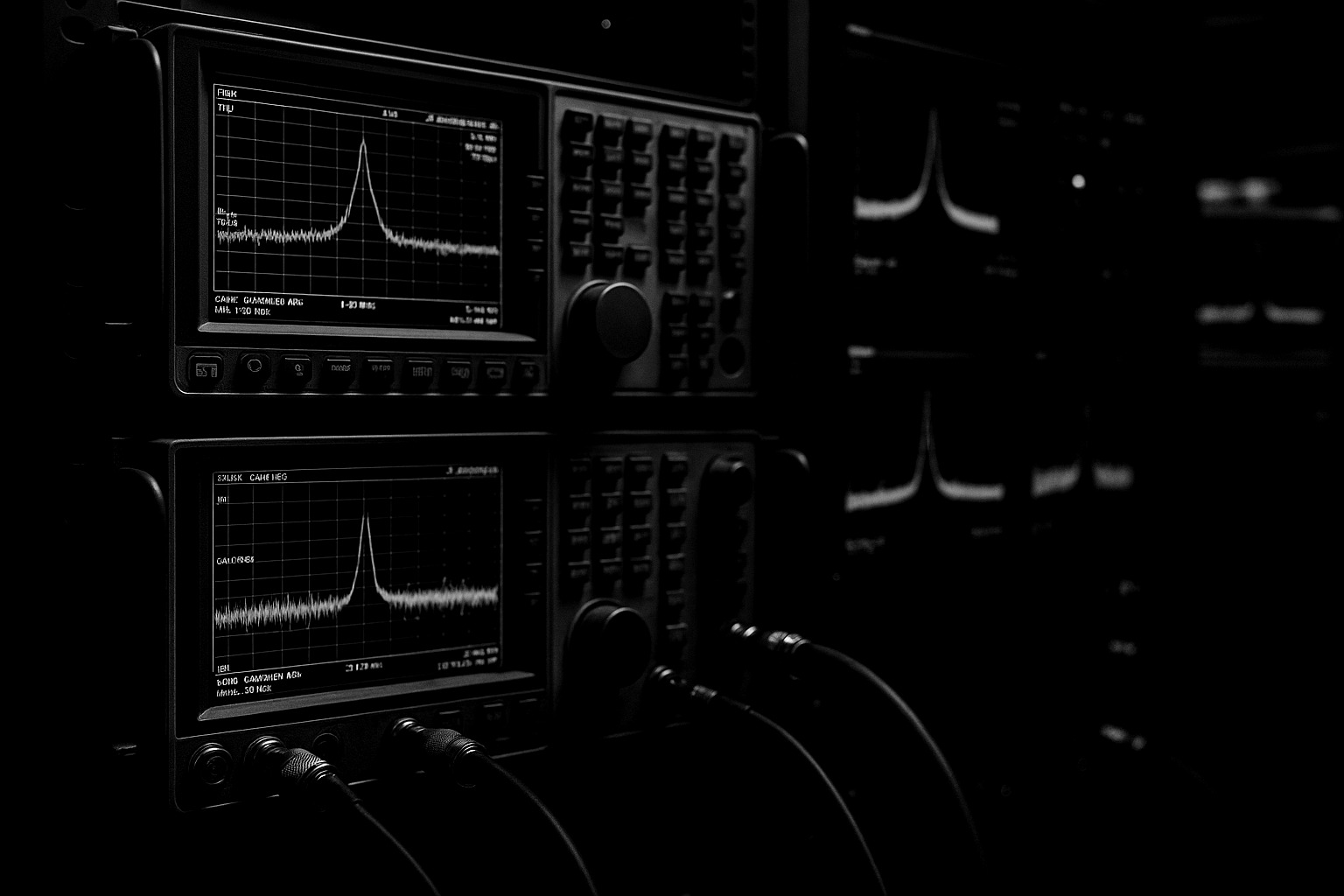
Radio Frequency Interference (RFI) surveys are the standard tool for characterizing a site’s electromagnetic environment. A proper RFI survey involves deploying calibrated measurement equipment at the candidate site and recording signals across the frequency bands you plan to use. Surveys should cover a minimum of 24 hours to capture time-varying interference sources, and ideally extend over several days to account for weekly patterns.
The survey results provide a baseline that you compare against your system’s interference tolerance thresholds. Every satellite communication link has a certain margin for interference — the difference between the desired signal level and the noise floor. If the measured interference in a critical band exceeds your margin, you must either find ways to mitigate the interference or consider a different site.
Mitigation strategies range from simple physical measures — like orienting antennas to place nulls toward known interference sources — to sophisticated electronic approaches including adaptive filtering and interference cancellation. The effectiveness and cost of these measures vary widely, making it essential to factor mitigation costs into your site comparison analysis. Working with experienced RF engineers and leveraging high-quality low noise amplifiers (LNA) can significantly improve interference resilience.
Civil and Infrastructure Requirements

Even a site with perfect RF characteristics and ideal orbital coverage is useless if you cannot build and operate a ground station there. The civil and infrastructure assessment examines the practical aspects of constructing and maintaining a facility at each candidate location.
Foundation and structural engineering requirements for ground station antennas are more demanding than many project managers initially expect. Large reflector antennas — anything above about 5 meters in diameter — require substantial concrete foundations engineered to handle wind loading, seismic activity, and the dynamic forces generated during antenna tracking manoeuvres. Soil conditions at the site directly affect foundation design complexity and cost.
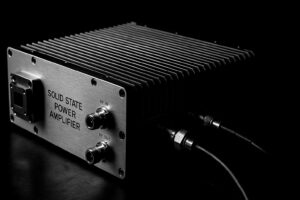
Building infrastructure for the electronics shelter, power systems, and support facilities adds another layer of civil engineering requirements. The shelter needs to accommodate racks of sensitive electronic equipment including solid state power amplifiers (SSPAs), modems, monitoring systems, and network connectivity equipment, all within a climate-controlled environment.
Power and Cooling Requirements
Ground stations are surprisingly power-hungry facilities. A medium-sized teleport with several antennas can easily consume hundreds of kilowatts, with high-power amplifiers and cooling systems representing the largest loads. Reliable power supply is absolutely critical — an interruption in power means an interruption in communications.
Most professional ground stations require dual utility power feeds from separate substations, backed by diesel or gas generators and uninterruptible power supplies (UPS). The availability and cost of utility power can vary enormously between candidate sites and can represent a significant portion of ongoing operational costs.
Cooling is the often-overlooked companion to power. High-power RF amplifiers, particularly those used for uplink transmissions, generate substantial waste heat that must be removed efficiently. In hot climates, the cooling challenge is compounded by high ambient temperatures that reduce the efficiency of air conditioning systems. Some operators in tropical locations have found that the cost of adequate cooling infrastructure rivals or exceeds the cost of the RF equipment itself.
Access and Security
Physical access to the site must be reliable year-round. Ground stations in remote locations benefit from reduced RF interference but may suffer from difficult access during adverse weather conditions. Road quality, distance from the nearest population center (for staff recruitment and emergency services), and proximity to transport hubs for equipment delivery all factor into the assessment.
Security requirements depend on the nature of the communications being handled. Government and military ground stations demand stringent physical security measures including perimeter fencing, surveillance systems, controlled access points, and sometimes blast protection. Commercial facilities require less intensive security but still need protection against vandalism, theft, and unauthorized access to sensitive equipment.
Regulatory and Environmental Considerations
Every country has its own regulatory framework governing satellite ground station construction and operation. Navigating these regulations is a time-consuming but essential part of the site selection process. Starting early on regulatory research can prevent costly surprises later.
The primary regulatory considerations include spectrum licensing, land use permissions, building permits, and environmental impact assessments. Spectrum licensing is particularly important: you need to confirm that you can obtain authorization to transmit and receive in your required frequency bands at your chosen location. In many jurisdictions, this involves coordination with existing spectrum users and may take months or even years to complete.
Environmental regulations can also shape site selection. Protected habitats, archaeological sites, scenic areas, and flight paths all impose restrictions on what you can build and where. In some cases, these constraints are absolute — you simply cannot build at certain locations regardless of how technically attractive they may be. In other cases, environmental mitigation measures can be incorporated into the project design, though they add cost and complexity.
International coordination may also be necessary, particularly for sites near national borders or for stations that will transmit at high power levels. The International Telecommunication Union (ITU) maintains frameworks for cross-border coordination that may need to be followed.
Cost Analysis Framework
Ultimately, the decision between candidate sites comes down to total cost of ownership (TCO) over the planned operational lifetime of the facility. A rigorous cost analysis framework considers both capital expenditure (CAPEX) and operating expenditure (OPEX), with appropriate attention to the time value of money.
Capital costs include land acquisition or lease, site preparation and civil works, antenna and equipment procurement, installation and commissioning, and initial licensing fees. Operating costs encompass power, cooling, staffing, maintenance, insurance, spectrum fees, and connectivity charges. For a typical ground station with a 20 to 25-year operational life, OPEX frequently exceeds CAPEX by a substantial margin.
The cost analysis should also incorporate risk-adjusted factors. A site in a politically unstable region may offer lower direct costs but carries higher risk of operational disruption. A site in a flood-prone area requires additional mitigation investment. A site with limited expansion potential may need to be supplemented by additional facilities sooner than expected, adding unplanned costs to the programme.
Expansion Planning
One of the most common regrets in ground station development is failing to plan adequately for growth. The satellite communications industry is evolving rapidly, with new constellation deployments, increasing data rates, and expanding service requirements. A site that perfectly meets today’s needs but has no room for additional antennas, equipment shelters, or power capacity can quickly become a constraint on business growth.
Good expansion planning starts at the site selection stage. The ideal site has enough physical space to at least double the initial antenna count, with utility services that can be upgraded to support the expanded facility. The site layout should be designed with future antenna positions identified, cable routes planned, and space reserved in equipment shelters for additional racks.
Working with experienced systems integrators who understand the full lifecycle of ground station infrastructure can help you avoid common planning pitfalls. They bring lessons learned from numerous deployments and can identify constraints that might not be obvious during the initial site assessment.
Bringing It All Together
Satellite ground station site selection is fundamentally a multi-criteria optimization problem. No single tool or methodology provides the complete answer, but a structured approach — starting with clear requirements, progressing through systematic evaluation of candidates, and culminating in a rigorous comparative analysis — consistently produces better outcomes than intuition-driven decisions.
The process typically follows a funnel approach. Start with a broad geographical search based on orbital coverage requirements, then progressively narrow the candidate list by applying RF, infrastructure, regulatory, and cost filters. Shortlisted sites receive detailed on-site assessments, including RFI surveys, geotechnical investigations, and stakeholder consultations, before a final selection is made.
For organizations new to ground station development, engaging specialist consultants early in the process can save substantial time and money. The cost of expert guidance during site selection is modest compared to the consequences of choosing a poor location — consequences that you would live with for the entire operational life of the facility.
As the satellite industry continues to grow, the demand for well-designed ground station infrastructure is only increasing. Whether you are building your first station or expanding an existing network, taking the time to get site selection right is one of the best investments you can make. With careful planning, thorough assessment, and experienced partners providing ground station control solutions, your facility can deliver reliable performance for decades to come.
Related Resource: For definitions of technical terms used in this guide, visit our RF & Satellite Communications Glossary, covering ground station, antenna, LNA, and satellite communications terminology.
Deep Dive: For a comprehensive overview of ground station subsystems — from antenna feeds and RF chains to ATOMS monitoring software — read our Satellite Ground Station Architecture Guide.