If you’ve been in the broadcast satellite business long enough, you know the pain. You’ve got an amplifier perfectly tuned for high Ku-band, then suddenly you need to cover a satellite assignment in low Ku. What do you do? Buy another unit? Reconfigure everything? Hope for the best?
That’s exactly the problem ultra band Ku SSPA broadcast satcom technology was designed to solve. We’re talking about amplifiers that cover the complete 12.75-14.8 GHz range in a single box. No switching. No reconfiguration. Just plug it in and it works.
The old approach meant keeping multiple amplifiers on hand for different frequency segments. That wasn’t just expensive – it complicated your disaster recovery planning and tied up capital in equipment that might sit on the shelf for months.
But here’s what makes broadcast different from other satcom applications: there’s zero room for failure. When you’re covering a live sports event or distributing programming to millions of viewers, your uplink needs to work perfectly every single time. Weather, equipment age, technical issues – none of it matters to the audience watching at home.
Why Broadcast Power Requirements Are Different
Let’s talk about what actually happens in a broadcast satellite uplink. Unlike point-to-point data links, broadcast operations typically run multiple carriers through the same amplifier. Think about it – a news organization might be pushing several simultaneous feeds from a remote location. Sports broadcasters need multiple camera angles. Entertainment networks distribute regional variations.
All of this puts serious stress on amplifier linearity. When you’ve got multiple carriers sharing an amplifier, any nonlinearity creates intermodulation products. And guess what? Those show up as visible artifacts on viewers’ screens. That’s not acceptable in professional broadcast.
Power requirements vary wildly depending on your setup. Small transportable antennas for news gathering? You need more amplifier power to compensate for that smaller dish. Big fixed installation at a teleport? You can trade some of that amplifier power for antenna aperture.
And if you’re operating in tropical regions, your weather margins can easily exceed what temperate climates need. Rain fade is real, and it’s a problem.
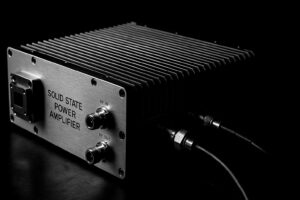
This is where something like Celestia TTI’s Ultra-Band Ku 600W SSPA makes sense. You get 600W of clean linear power across the entire 12.75-14.8 GHz band without having to swap hardware or fiddle with configurations when your satellite assignment changes.
The Real Benefits of Ultra Band Ku SSPA Coverage
Here’s what changed the game: instead of having separate amplifiers for low Ku (12.75-13.25 GHz) and high Ku (13.75-14.5 GHz), you get one unit that handles everything. The engineering challenge wasn’t trivial – maintaining flat gain and consistent performance across more than 2 GHz of bandwidth required some clever RF design.
But the operational advantages are huge. Breaking news happens, and you need to deploy to a location served by a different satellite operator? No problem. Your backup satellite operates in a different frequency segment? Doesn’t matter. You’re already covered.
There’s also the inventory angle. Instead of maintaining separate stock for different frequency bands across multiple facilities, you can standardize on ultra-band units. Your spare equipment works for any installation. Your logistics get simpler. Your capital isn’t tied up in frequency-specific hardware.
This matters especially for organizations running multiple uplink sites. When every facility uses compatible equipment, your operational flexibility increases dramatically.
What’s Actually Happening in the 12.75-14.8 GHz Band
The Ku-band uplink spectrum isn’t just one continuous block. It’s actually several distinct allocations that serve different purposes and geographic regions.
The 12.75-13.25 GHz segment handles fixed satellite services in many parts of the world. The 13.75-14.5 GHz range carries most broadcast uplink traffic globally. Then you’ve got 14.0-14.8 GHz supporting various government and commercial applications.
Getting an amplifier to maintain consistent performance across all of this isn’t straightforward. The matching networks need careful optimization to keep impedance characteristics stable across the full range. Device selection matters – you’re looking for not just peak performance but consistency across frequency.
Output combining structures need broadband designs that avoid resonances within the operating band. And you’ve got to meet regulatory requirements for spurious emissions throughout that entire extended bandwidth.
Why GaN Technology Changed Everything
If you’re still running older gallium arsenide (GaAs) amplifiers, here’s what you’re missing with GaN power amplifier technology:

GaN devices can handle voltages over 50V, compared to the 12-28V typical of GaAs. That might sound like a technical detail, but it matters. Higher voltage means lower current for the same power, which means less resistive loss in the amplifier chain. Translation: better efficiency and lower operating costs.
The thermal advantages are even more interesting. GaN handles higher junction temperatures while maintaining the lifetime you need for 24/7 broadcast operations. This lets you pack more power into a smaller footprint without compromising reliability.
In practical terms, this means your electricity bills go down. Your cooling requirements simplify. Your equipment takes up less rack space. All of which matters when you’re running a facility that needs to operate continuously.
Products like Celestia’s DBS-band GaN SSPAs demonstrate this perfectly – up to 550W of linear power with efficiency that older TWTA technology simply can’t match.
Power Combining: How to Scale Without Starting Over
When you need serious power for broadcast uplinks, you’re combining output from multiple GaN devices. The question is how you do it.
Corporate combiners (Wilkinson structures and similar designs) give you excellent isolation between modules while keeping broadband performance. The nice thing about this approach is that if one module fails, you don’t lose everything – your output power drops proportionally but the system keeps running.
There are also spatial combining techniques that can hit higher efficiency at extreme power levels. These combine outputs electromagnetically rather than through transmission lines. The engineering is more complex and manufacturing tolerances are tighter, which is why you don’t see them as much in production equipment yet.
The real win with modular architectures is operational flexibility. You can do hot-swap module replacement during maintenance windows. You can scale power up or down based on application needs. You can build in redundancy so individual component failures don’t take down your uplink.
Thermal Management: Making It Work in Real Conditions
Let’s be honest – outdoor amplifier installations face brutal conditions. Arctic cold. Desert heat. Direct sun loading on the enclosure during daytime. Your thermal management needs to handle all of it.
Good baseplate design moves waste heat from device junctions to external surfaces efficiently. Material choice matters here – aluminum works for most applications, but the most demanding installations might need copper or specialized composites.

Forced air cooling helps when you’re pushing high power or dealing with elevated ambient temperatures. Modern designs use variable speed fans that adjust based on measured temperatures. This optimizes the balance between cooling effectiveness and noise.
For the highest power applications, liquid cooling becomes necessary. Closed-loop systems circulate coolant through heat exchangers integrated into the amplifier structure. It’s more complex, but it enables operation at power levels that would overwhelm air cooling.
Plug and Play Integration (When It Actually Works)
“Plug and play” gets thrown around a lot, but what does it actually mean for broadcast operations?
First, physical compatibility. If your new SSPA doesn’t mount where the old one did, or if waveguide flanges don’t match, you’re not plug-and-play – you’re doing custom installation work.
Control interfaces matter too. If your M&C platform doesn’t already speak the protocol your amplifier uses, someone’s writing code. True plug-and-play means your existing monitoring systems work out of the box.
Automatic configuration helps too. The amplifier should detect connected antenna characteristics and adjust parameters accordingly. Self-test routines should verify operation before enabling RF output. Configuration profiles should let you switch between operating modes quickly.
This is where ancillary equipment like Celestia’s outdoor frequency converters comes in handy – they offer 1:1 or 2:1 redundancy configurations with fast switching, and they’re designed to work seamlessly with the SSPA units.
Remote Monitoring (Because Nobody Staffs Sites 24/7 Anymore)
Most broadcast facilities run with minimal on-site presence these days. Everything depends on robust remote monitoring.
Modern SSPAs track everything that matters: RF output power, reflected power, device temperatures, supply voltages, cooling system status. This data needs to be accessible remotely and presented in a way that actually makes sense.
Trend analysis is underrated. If you’re watching parameter trends over time, you can often spot problems developing before they become service-affecting. Device temperature creeping up gradually? Might be time to clean the air filters or check the cooling system.
Configurable alarms let you set thresholds appropriate for your operation. The goal is proactive notification when things start going wrong, not just discovering problems after service impact.
Reliability: The Part Nobody Wants to Talk About
Broadcast operations have zero tolerance for equipment failures during scheduled programming. That’s not marketing speak – it’s your contract terms.
Good reliability starts with component derating. Every part should operate well within its maximum ratings under worst-case conditions. This conservative approach costs more upfront but extends lifetime and reduces early failures.

Protection circuitry prevents damage from fault conditions. Overdrive protection limits input power that could saturate stages. VSWR protection reduces output when antenna faults create dangerous reflected power. Thermal shutdown prevents operation at temperatures that accelerate degradation.
Then there’s redundancy. Dual power supplies mean one can fail without taking down the system. Parallel amplifier modules with automatic reconfiguration maintain operation when individual modules need service.
These features aren’t optional for professional broadcast. They’re what separates equipment that meets SLAs from equipment that just meets specs.
Field Serviceability: When Things Go Wrong at 3 AM
Equipment breaks. Usually at the worst possible time. The question is whether your field technician can fix it or whether you’re calling for factory service.
Modular design matters here. If you can swap a failed power supply or amplifier module without replacing the entire unit, you’re back up faster and your spare parts costs stay reasonable.
Hot-swap capability is even better. During maintenance windows, you can replace suspect modules while keeping partial output power available. For redundant configurations, you might never need a complete shutdown.
Built-in diagnostics help too. Front panel indicators should show status at a glance. Control interfaces should provide detailed data that guides technicians to the actual problem. This reduces troubleshooting time and minimizes the need for specialized test equipment at remote sites.
The Bottom Line
If you’re operating broadcast satellite uplinks today, ultra-band Ku SSPA technology isn’t just an incremental improvement. It’s a fundamental shift in how flexible and reliable your infrastructure can be.
The combination of full 12.75-14.8 GHz coverage, GaN efficiency, and modern integration capabilities means you can actually handle satellite reassignments without equipment swaps. Your operational costs go down. Your flexibility goes up.
Is it perfect? No. There are still tradeoffs in any engineering design. But for organizations that need to maintain service across diverse frequency allocations while meeting professional broadcast reliability standards, this technology represents the current state of the art.
The broadcast satcom industry keeps evolving. Traffic requirements increase. Efficiency demands get stricter. Having infrastructure that can adapt without major overhauls is increasingly valuable.
Want to Learn More?
If you’re evaluating amplifier options for your broadcast infrastructure, Celestia Technologies has been developing high-power GaN SSPA solutions specifically for demanding satcom applications. Their product portfolio covers everything from compact 200W units to phase-combined systems delivering several kilowatts.
Worth a look if you’re tired of managing multiple frequency-specific amplifiers or if you’re planning infrastructure upgrades.
Related Equipment:
• Ultra-Band Ku 600W SSPA – The flagship product covering 12.75-14.8 GHz in a single unit
• High Power DBS GaN SSPAs – 200W to 550W options for DBS broadcast applications
• Outdoor Frequency Converters – Redundancy configurations with fast failover switching
• Phase-Combined Systems – Scalable multi-kW solutions for high-power uplinks