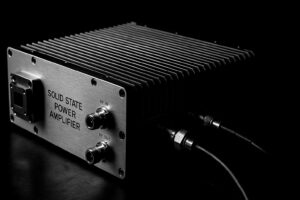
The first amplification stage in any satellite receive chain establishes the noise floor for the entire system, making it arguably the most critical component in determining overall performance. This essential role makes low noise amplifier satellite communications technology one of the most carefully specified components in ground station design and procurement. Understanding LNA parameters and selection criteria enables informed decisions that maximize system performance while meeting budget and schedule constraints.
The physics of amplification inevitably adds noise to signals passing through electronic devices, regardless of design sophistication. This added noise competes with weak satellite signals, degrading the quality of received information and limiting system sensitivity. Minimizing this noise contribution while providing adequate amplification to overcome subsequent losses represents the fundamental challenge of LNA design that drives continuous technology advancement.
Modern LNAs achieve remarkable performance levels through advanced semiconductor technology and careful circuit design refined over decades of development. Noise figures below one decibel are routine at common satellite frequencies from established manufacturers. However, specifications alone do not ensure successful integration into operational systems. Understanding how LNA parameters interact with broader system requirements guides appropriate selection.
LNA Fundamentals and Key Parameters
Several interrelated parameters characterize LNA performance for system design purposes, each affecting different aspects of overall system capability. Noise figure quantifies the noise contribution in decibels relative to an ideal noiseless amplifier. Gain determines the amplification provided to overcome downstream losses. Third-order intercept point indicates linearity under strong signal conditions. Input and output return loss describe impedance matching quality at the amplifier interfaces.
The LNA noise figure directly impacts system noise temperature and therefore overall receive sensitivity. Each tenth of a decibel improvement in noise figure provides measurable benefit in link margin for weak signal reception. This sensitivity to small differences drives careful specification and selection processes with attention to measurement uncertainty.
Gain and Linearity Trade-offs
Amplifier gain must be sufficient to overcome losses in subsequent stages while establishing system noise figure through appropriate gain distribution. However, excessive gain can overload downstream components when strong signals are present, causing distortion or saturation. The gain specification carefully balances these competing considerations based on specific system requirements.
Linearity requirements depend heavily on the operating environment and signal conditions. Ground stations near powerful terrestrial transmitters or receiving multiple strong satellite signals need higher linearity to avoid intermodulation products that create interference. Remote sites with controlled RF environments can accept reduced linearity in exchange for other performance advantages.
The relationship between gain, noise figure, and linearity involves fundamental trade-offs inherent in amplifier physics. Pushing any single parameter to extreme levels inevitably compromises the others. Practical designs balance these parameters for specific application requirements rather than seeking universal optimization.
Frequency Band Selection Guide
Satellite communications span a wide frequency range from L-band below 2 GHz through Q-band above 40 GHz, with continuing expansion to even higher frequencies. Each band presents different propagation characteristics, regulatory environments, and equipment requirements. LNA selection must match the specific bands of interest while considering potential future expansion needs.
S-band LNA applications include telemetry, tracking, and command links as well as certain mobile satellite services with moderate bandwidth requirements. These moderate frequencies permit excellent noise performance with relatively simple designs using mature technology. Atmospheric effects are minimal at S-band, enabling reliable links even in adverse weather.
Ka-band LNA technology serves high-throughput satellite applications where wide bandwidth supports demanding data rate requirements for broadband services. Higher frequencies present greater design challenges but enable compact antennas and access to less congested spectrum with substantial capacity. Rain fade effects require appropriate link margin allocation and site diversity strategies.
Noise Figure Optimization Techniques
Achieving minimum noise figure requires careful attention to device selection, circuit topology, matching network design, and physical implementation throughout the amplifier. Each element contributes to overall performance in ways that interact with other design choices.
Device technology selection begins the optimization process and largely determines achievable performance limits. Gallium arsenide and indium phosphide high electron mobility transistors dominate satellite frequency LNA applications due to inherently excellent noise properties. Device selection considers noise performance, gain capability, and linearity characteristics in combination.
Temperature Compensation Methods
Semiconductor device characteristics vary with temperature in ways that affect both noise and gain performance. Uncompensated amplifiers exhibit performance variations that may exceed system tolerance as ambient conditions change through diurnal cycles and seasonal variations.
Active bias compensation adjusts operating point to maintain consistent performance across temperature ranges. Sensors monitoring device or ambient temperature drive bias adjustments that counteract temperature-dependent drift. Properly designed compensation maintains performance within specified limits throughout operating ranges.
Thermal management affects operating temperature independent of ambient conditions through active or passive techniques. Heat sinks conduct waste heat away from sensitive devices. Fans provide convective cooling for higher power dissipation. Thermoelectric coolers can maintain device temperature within narrow optimal ranges. The cost and complexity of thermal management must be justified by resulting performance benefits.
Redundancy Configuration Options
Mission-critical applications require continuous operation despite equipment failures that would otherwise interrupt service. Redundant LNA configuration options provide resilience through various approaches with different characteristics and costs.
Basic redundancy switches between primary and backup amplifiers based on monitored parameters or detected failures. This approach protects against amplifier failure but introduces switching losses and potential reliability concerns in the switch mechanism itself.
Redundant LNA configuration using parallel amplifiers with output combining provides graceful degradation under failure conditions. Loss of one amplifier reduces total gain without complete failure, maintaining service at reduced capacity. This approach suits applications where partial capability is preferable to complete outage.
LNB vs Standalone LNA
Low noise block downconverters combine amplification with frequency conversion in integrated packages serving specific application requirements. These devices offer cost and simplicity advantages for appropriate applications with standard requirements. Standalone LNAs provide flexibility that integrated solutions cannot match for customized systems.
LNBs suit applications with standard frequency plans and moderate performance requirements typical of commercial services. The high volumes of direct broadcast satellite reception have driven LNB costs to levels impossible for standalone components with similar functionality. However, LNB performance typically trails the best discrete designs optimized for demanding applications.
Standalone LNAs enable optimized system design with separate amplification and frequency conversion stages selected independently. This approach permits selection of best-in-class components for each function based on specific requirements. Custom frequency plans and unusual requirements favor discrete approaches despite higher cost.
Integration with Receive Chains

The LNA interfaces with other receive chain components including the antenna feed, protection devices, frequency conversion equipment, and monitoring systems. Successful integration requires attention to each interface and understanding of interaction effects.
Input protection devices guard the LNA against damage from high-power signals or static discharge that could destroy sensitive transistors. These protective elements introduce some noise and loss that must be accounted in system calculations. The trade-off between protection level and performance impact requires engineering judgment based on threat environment assessment.
Military and Defense Applications
Defense satellite communications impose additional requirements beyond commercial applications that affect design and procurement choices. Extended temperature ranges, shock and vibration resistance, and specific electromagnetic compatibility standards affect design choices and limit available options.
Security considerations may influence component selection and manufacturing location for classified applications. Supply chain integrity concerns drive requirements for domestic or allied nation sources. These constraints may significantly limit options compared to commercial programs with no such restrictions.
Qualification testing for military applications follows rigorous standards intended to ensure reliability under combat conditions including environments far more severe than commercial applications encounter. The investment in qualification typically limits economic viability to applications with genuine military requirements that justify the additional cost.
Radio Astronomy Specifications
Radio astronomy applications demand the ultimate in receiver sensitivity for detecting faint cosmic signals. System noise temperatures below 20 Kelvin require cryogenic cooling of the LNA and careful attention to every noise contribution throughout the receive chain.
Frequency agility across wide bandwidths supports observation of different astronomical phenomena at various wavelengths. Receivers covering multiple octaves present design challenges beyond those of narrowband communications systems optimized for specific allocations.
Radio frequency interference susceptibility concerns drive linearity requirements beyond typical communication applications. Observations may occur near strong terrestrial signals that must not contaminate astronomical data through intermodulation or saturation effects.
The low noise amplifier remains a critical enabler of satellite communications and related applications demanding receiver sensitivity. Continuing advances in semiconductor technology and design techniques progressively improve achievable performance. Careful selection and integration of these essential components maximizes system capability and mission success.