Ground station monitoring control software forms the operational backbone of every modern satellite communication facility. As ground segment infrastructure grows in complexity with multi-orbit constellations, multi-mission requirements, and geographically distributed antenna sites, the systems that monitor and manage this equipment become increasingly critical.
Operators must maintain continuous visibility into hundreds of parameters across dozens of subsystems while responding to anomalies within seconds to protect service availability. Moreover, the shift toward unmanned and remote ground station operations places even greater demands on ground station monitoring control software to automate routine tasks and escalate genuine issues intelligently. This article examines best practices for designing, selecting, and operating M&C solutions that keep complex ground infrastructure performing reliably.
Ground Station Monitoring Control Software: M&C System Architecture Overview
Layered Architecture Design
Modern M&C solutions satellite operators deploy follow a layered architecture that separates equipment interfaces from control logic and operator presentation. At the lowest level, front-end controllers communicate directly with individual subsystems including antenna control units, power amplifiers, frequency converters, low noise amplifiers, and baseband equipment. These controllers translate proprietary equipment protocols into standardized data streams that higher layers can process uniformly regardless of manufacturer.
The middle layer implements the core ground station monitoring control software logic. This service layer aggregates data from all front-end controllers, applies alarm thresholds, executes automated procedures, and maintains the configuration database that defines how each subsystem should operate for every supported mission. Database-driven configuration enables operators to modify system behaviour without software changes, significantly reducing the time required to support new missions or accommodate equipment modifications.
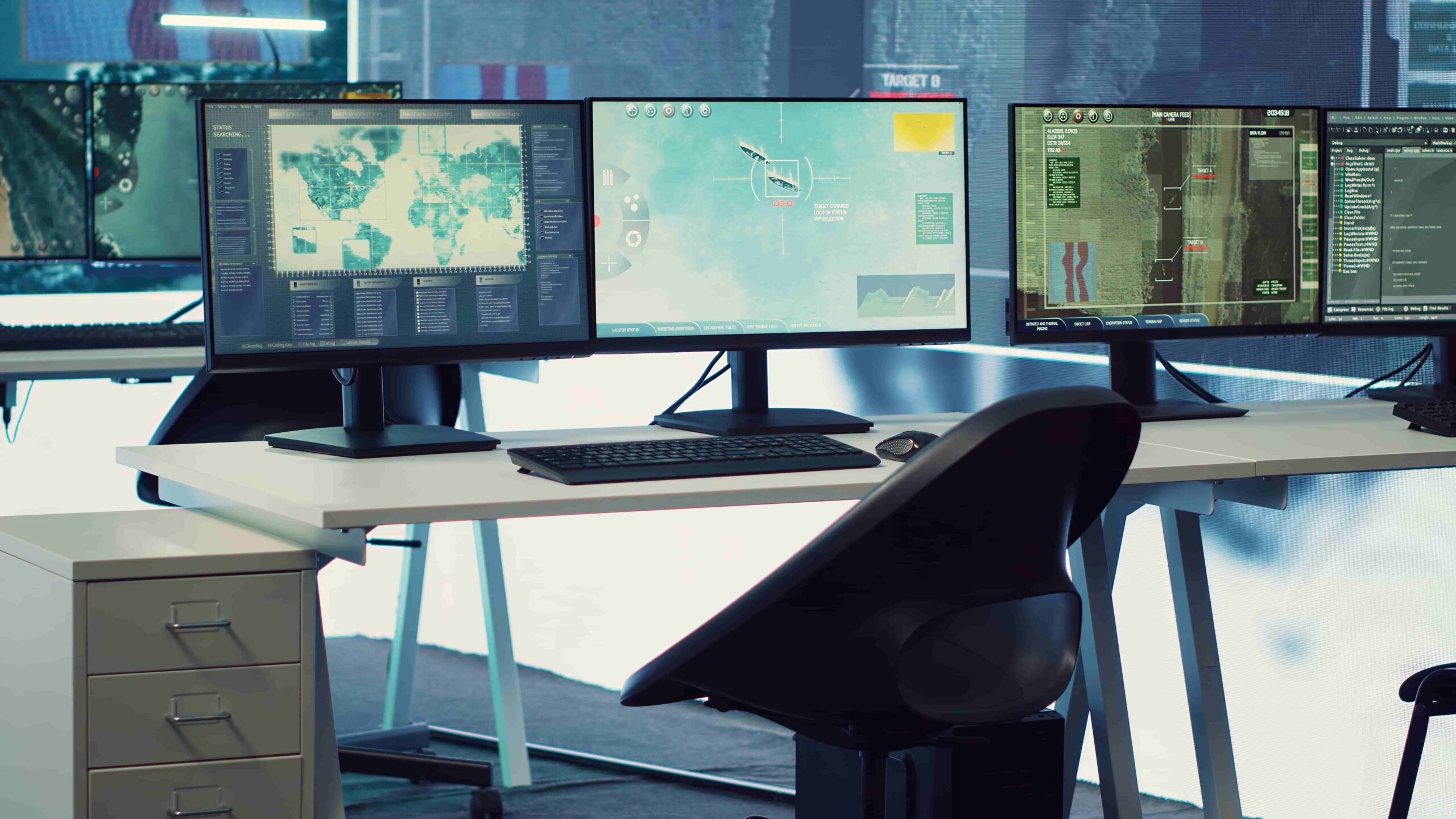
The presentation layer provides the human-machine interface through which operators visualize station status, acknowledge alarms, and initiate manual commands. Advanced graphical user interfaces display hierarchical system views that allow rapid drill-down from high-level station overview to individual equipment parameters. Additionally, web-based interfaces enable secure remote access from operations centres located far from the physical ground station infrastructure. This layered separation ensures that changes at any level do not cascade unpredictably through the complete system.
Communication Protocols and Standards
Effective ground station monitoring control software must communicate with equipment from diverse manufacturers using multiple protocols. SNMP satellite monitoring provides a widely adopted standard for network-managed devices, enabling the M&C system to poll equipment status and receive asynchronous trap notifications when parameters exceed defined thresholds. Many modern ground station subsystems support SNMP natively, simplifying integration with minimal custom development.
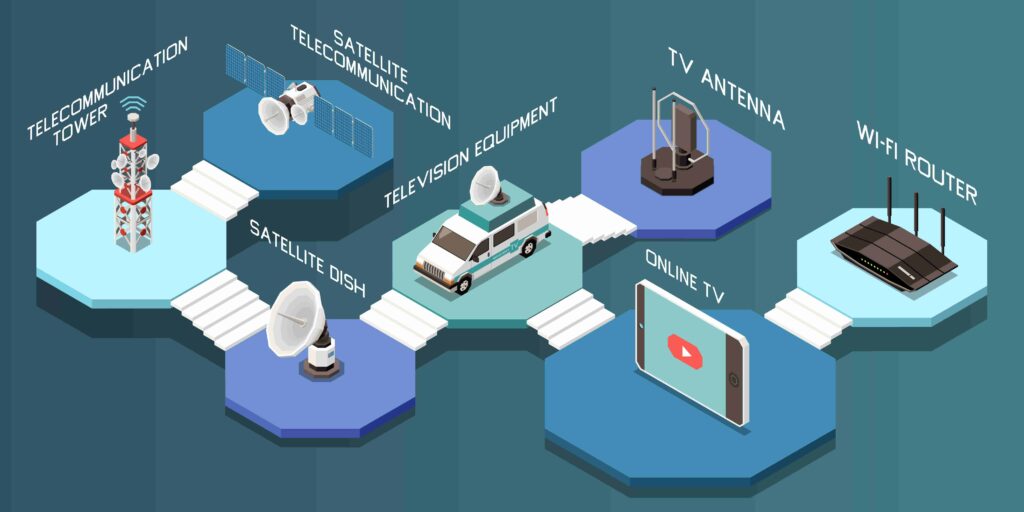
However, legacy and specialized equipment frequently requires proprietary serial or Ethernet-based protocols that the M&C system must accommodate through custom driver development. Celestia TTI addresses this challenge through its Front-End Controller, an intelligent subsystem controller that provides flexible monitoring and control of front-end equipment and antennas across any ground station configuration. The FEC abstracts equipment-specific protocols behind a standardized interface, enabling the upper M&C layers to operate independently of the underlying hardware diversity. Furthermore, the system can be tailored to any antenna and front-end manufacturer, eliminating vendor lock-in at the equipment level.
Key Features and Capabilities of Ground Station Monitoring Control Software
Real-Time Equipment Monitoring
Continuous real-time monitoring forms the foundation of effective ground segment automation. The M&C system must sample equipment parameters at rates sufficient to detect transient anomalies that could affect mission performance. Critical parameters such as transmit power levels, receiver noise temperatures, antenna pointing accuracy, and frequency stability require monitoring intervals measured in seconds or fractions of seconds. Less dynamic parameters including cabinet temperatures, power supply voltages, and environmental conditions may tolerate longer polling intervals without compromising operational awareness.
Data visualization must present complex information intuitively to operators who may be managing multiple simultaneous missions across several antenna systems. Hierarchical displays organized by functional chain allow rapid identification of degraded subsystems within the overall signal path. Trend displays reveal gradual performance drift that threshold-based alarms alone might not capture until degradation becomes service-affecting. Moreover, the ability to overlay current performance against historical baselines helps operators distinguish genuine anomalies from normal operational variations.
High-performance ground station monitoring control software handles thousands of monitoring points simultaneously without introducing latency that could delay alarm presentation. Database architectures optimized for time-series data efficiently store the enormous volumes generated by continuous monitoring across large installations. This historical data proves invaluable for performance trending, fault investigation, and demonstrating compliance with service level agreements to satellite operators and end customers.
Alarm Management Systems
Sophisticated alarm management separates effective M&C solutions satellite operations depend on from basic monitoring tools. Raw alarm generation based solely on threshold crossings produces excessive notifications that desensitize operators and mask genuine issues within noise. Intelligent alarm processing applies techniques including alarm suppression during planned maintenance, correlation of related alarms to identify root causes, and severity escalation when conditions persist beyond defined timeframes.
Alarm hierarchies should reflect operational impact rather than merely equipment status. A failed redundant unit that does not affect service availability warrants different treatment than a fault threatening active communication links. Contextual alarm processing considers the current operational state when evaluating significance. For instance, elevated amplifier temperatures during high-duty-cycle transmission windows may be normal behaviour rather than an indication of cooling system failure. Ground station monitoring control software must encode this operational intelligence to prevent alarm fatigue while ensuring genuine threats receive immediate attention.
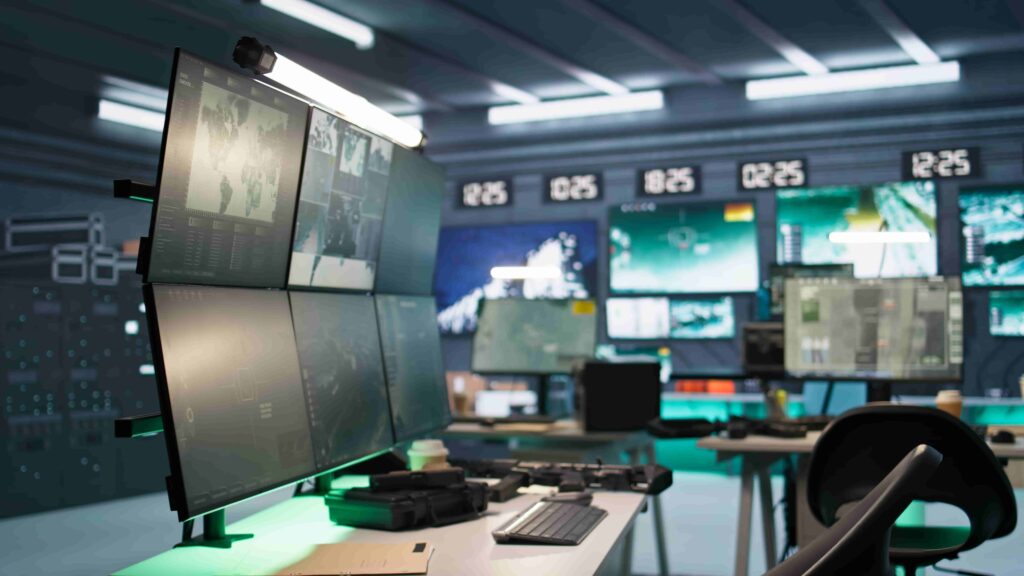
Additionally, alarm routing must reach the appropriate personnel through multiple notification channels. Console displays serve operators physically present at the control position. Email and SMS notifications alert on-call engineers when unmanned stations detect conditions requiring intervention. Integration with incident management systems creates automatic trouble tickets that track fault resolution through established workflows. This multi-channel approach ensures that no critical alarm goes unaddressed regardless of staffing levels or time of day.
Automation and AI Integration in Ground Station Monitoring Control Software
Predictive Maintenance
Predictive maintenance represents one of the most valuable applications of data analytics within ground station monitoring control software platforms. By analyzing historical performance trends across equipment populations, machine learning algorithms identify degradation patterns that precede failure. Amplifier output power trending downward at an accelerating rate, antenna drive motor current increasing gradually over weeks, or frequency converter spurious emissions drifting toward specification limits all provide early warning that enables proactive intervention before service impact occurs.
Implementing predictive maintenance requires consistent, high-quality historical data spanning sufficient time periods to establish reliable baseline behaviour for each equipment type and operating condition. The M&C system must capture and retain detailed performance records organized in formats suitable for analytical processing. Celestia TTI’s CSMC platform incorporates mission-oriented configuration and multi-mission support with comprehensive data logging that provides the historical foundation predictive analytics require. Furthermore, the CSMC system supports multi-antenna sites with parallel operations and resource management capabilities essential for complex installations.
The transition from reactive to predictive maintenance delivers measurable operational benefits. Unplanned downtime decreases as potential failures are identified and addressed during scheduled maintenance windows. Spare parts inventory optimization improves when replacement timing becomes predictable rather than emergency-driven. Most importantly, service availability to satellite operators increases as equipment failures are prevented rather than merely responded to after they impact communications.
Automated Operations and Scheduling
Ground segment automation extends beyond monitoring into active operational control of the complete facility. Automated pass scheduling allocates antenna and equipment resources across multiple simultaneous missions, optimizing utilization while respecting priority rules and equipment constraints. Pre-pass configuration sequences automatically set up the complete signal chain for each scheduled contact, configuring frequency converters, selecting appropriate amplifiers, positioning antennas, and verifying readiness before the satellite rises above the horizon.
During passes, automated procedures manage routine operations including antenna tracking, frequency compensation for Doppler shift, power level optimization, and data recording. Post-pass activities such as equipment reconfiguration, data transfer, and performance report generation proceed without operator intervention. This level of automation enables a single operator to manage multiple antenna systems simultaneously, dramatically reducing the staffing costs associated with continuous ground station operations.
Remote ground station operations become feasible when automation handles the vast majority of routine tasks. Operators at a central control facility supervise multiple distributed sites through secure network connections, intervening only when automated systems encounter conditions outside their programmed responses. This operational model reduces the need for skilled technicians at each physical location while maintaining the continuous monitoring essential for reliable satellite communication services.
Security Considerations for Ground Station Monitoring Control Software
Cybersecurity Architecture
As ground station monitoring control software increasingly connects to enterprise networks and remote access infrastructure, cybersecurity becomes a critical design consideration. The M&C system controls physical equipment that directly affects satellite communication services. Unauthorized access could disrupt operations, damage equipment through improper commands, or compromise sensitive mission data flowing through the ground station. Defense-in-depth strategies must protect M&C systems at network, application, and operational levels simultaneously.
Network segmentation isolates ground station control systems from general enterprise networks and internet-facing systems. Firewalls and intrusion detection systems monitor traffic crossing security boundaries for anomalous patterns. SNMP satellite monitoring implementations must use SNMPv3 with authentication and encryption rather than earlier protocol versions that transmit community strings in cleartext. Additionally, all remote access connections should traverse encrypted tunnels with multi-factor authentication requirements.
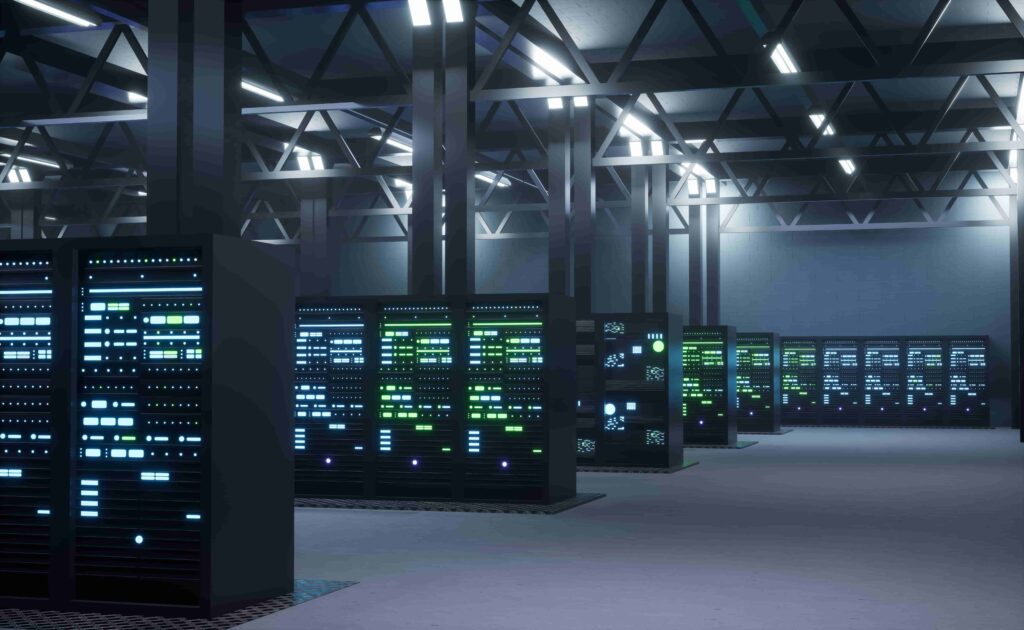
Application-level security enforces role-based access control that limits each operator’s capabilities to those required for their responsibilities. Command authorization workflows require appropriate approval before executing potentially disruptive operations such as transmitter activation or antenna stowing. Comprehensive audit logging records every operator action and system event, providing the forensic trail necessary for incident investigation and regulatory compliance. The combination of strong RF technology infrastructure with robust software security frameworks ensures that ground stations remain both operationally effective and resilient against evolving cyber threats.
Physical and Operational Security
Physical security measures complement cybersecurity protections for remote ground station installations. Perimeter monitoring, access control systems, and environmental sensors integrated into the M&C platform provide comprehensive situational awareness of the physical facility. Camera systems with motion detection enable remote visual inspection of equipment areas when alarms indicate potential issues. Environmental monitoring detects conditions such as flooding, fire, unauthorized entry, or HVAC failure that threaten equipment safety.
Operational security procedures define how personnel interact with ground station monitoring control software during normal operations, maintenance activities, and emergency scenarios. Clear separation between monitoring and control privileges prevents accidental equipment damage during routine observation. Maintenance lockout procedures ensure that equipment under service cannot be remotely commanded. Emergency procedures provide documented guidance for responding to equipment failures, natural disasters, and security incidents affecting ground station operations.
Vendor Selection Guide for Ground Station Monitoring Control Software
Multi-Vendor Integration
The ability to integrate equipment from multiple manufacturers represents perhaps the most important capability when evaluating ground station monitoring control software platforms. Ground stations typically incorporate antennas, amplifiers, converters, modems, and ancillary equipment from several different suppliers. M&C solutions satellite operators select must communicate effectively with this diverse equipment base without requiring costly custom integration for each new device type.
Celestia TTI’s M&C solutions exemplify this vendor-agnostic approach. The platform can be adapted to any antenna and front-end configuration through a tailoring process that maps equipment-specific interfaces to the standardized M&C framework. This flexibility extends to telescope control applications, demonstrating the architectural versatility required for diverse operational environments. The Celestia Technologies Group reinforces this capability through its comprehensive monitoring and control technology portfolio spanning satellite ground stations and complex infrastructure across multiple group companies.
Driver libraries supporting common equipment types accelerate integration timelines and reduce project risk. However, the ability to develop custom drivers efficiently for specialized or legacy equipment remains essential. Well-documented driver development frameworks enable third parties or in-house engineering teams to create equipment interfaces independently, avoiding complete dependence on the M&C vendor for every future equipment addition.
Scalability and Redundancy
Ground station monitoring control software must scale from single-antenna installations to complex multi-site networks without architectural redesign. Operators who begin with modest facilities frequently expand as business grows, and the M&C platform must accommodate this growth without forklift upgrades. Database-driven configuration approaches enable scaling through parameter addition rather than software modification. Modular architectures where additional front-end controllers extend capacity incrementally provide the most practical scaling path.
Redundancy requirements vary significantly across different operational contexts. Commercial telecommunications ground stations typically demand hot standby M&C configurations with automatic failover measured in seconds. Scientific and research facilities may accept longer recovery times that enable cold standby approaches at lower cost. The M&C platform should support multiple redundancy architectures configurable to match specific operational requirements and budget constraints without requiring different software versions.
Furthermore, ground station monitoring control software must demonstrate robust performance under degraded conditions. Loss of communication with individual equipment items should not affect monitoring of remaining subsystems. Network interruptions between distributed components should trigger graceful degradation rather than system-wide failure. High-reliability GaN solid state amplifiers with graceful degradation capabilities exemplify the equipment-level resilience that M&C systems must complement with equally robust monitoring and control infrastructure to ensure continuous ground station availability.
Looking for proven monitoring and control solutions to manage your ground station infrastructure? Celestia TTI delivers flexible, scalable M&C platforms backed by decades of experience in satellite ground systems for institutional, commercial, and defence customers worldwide.
Ground station solutions |
SSPA power amplifiers |
RF technology platforms |
M&C technology portfolio